Reachability Analysis for SCA Vulnerabilities
Overview
Reachability Analysis helps you prioritize Software Composition Analysis (SCA) findings by determining whether the vulnerable function of a dependency is actually reachable from your application code.
A dependency can have a critical CVE without your application ever calling the affected function. Reachability Analysis adds this missing context automatically, so teams can focus remediation effort on vulnerabilities that represent real risk instead of triaging every CVE with the same priority.
Conviso builds a call graph of your application, a map of every function and every call between functions, extracted directly from the source code. For each SCA finding, Conviso checks whether any path exists in the call graph leading to the vulnerable function. If a path is found, the finding is marked as Reachable by static analysis, along with the specific call chain (file, function, and line for each hop) as evidence.
This runs automatically in the background for eligible assets.
Reachability Analysis is currently supported for GitHub, Azure DevOps and GitLab integrations.
Eligibility
An asset is automatically picked up for Reachability Analysis when:
- The SCA scan type is enabled for the asset.
- Conviso has access to the asset's source code via a connected integration.
Reachability results are recalculated as new commits and new SCA findings are detected, so the status and trace shown in the Platform reflect the most recently analyzed code.
Supported Languages
Call graph generation currently supports: Ruby, Python, JavaScript, Java, Kotlin, and Go.
If an asset uses a language outside this list, its SCA findings remain visible as usual, but reachability status is not computed for them.
Viewing Reachability Results in the Platform
Reachability Status
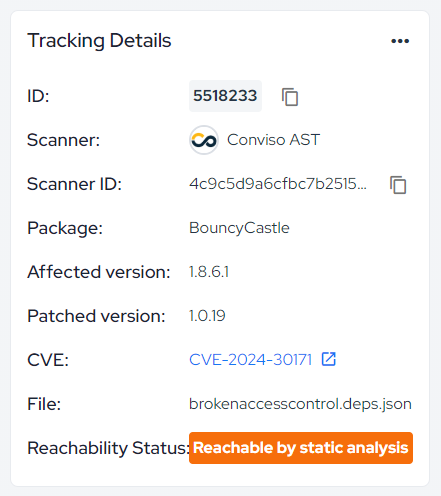
On the vulnerability detail page, SCA findings display a Reachability Status badge with one of the following values:
- Undetermined: no path to the vulnerable function was found.
- Reachable by static analysis: a call path was found in the codebase.
Reachability Traces
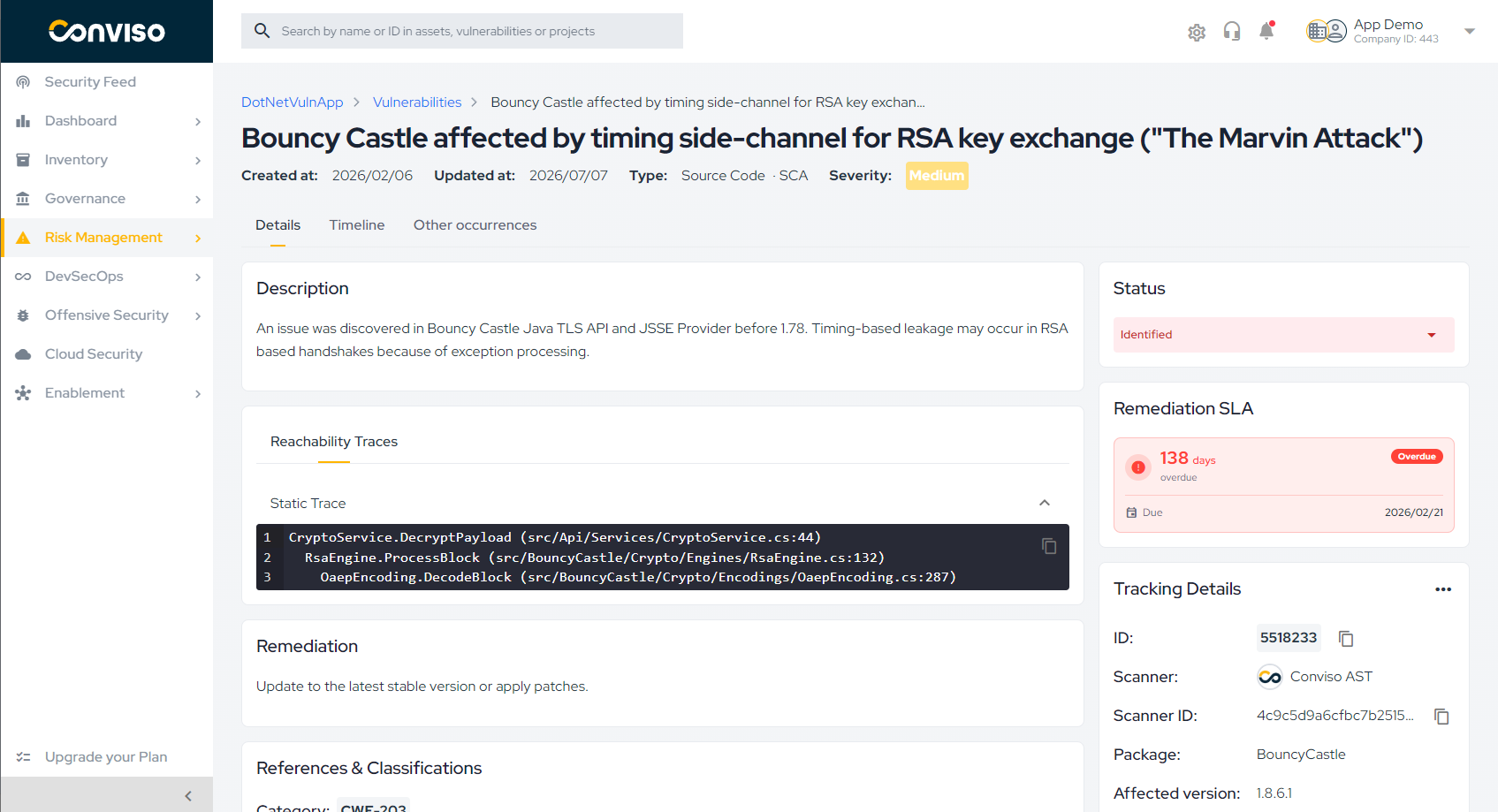
When a finding is marked reachable, a Reachability Traces tab becomes available on the vulnerability detail page. It shows the call trace as a sequence of hops (function_name (file_path:line)), so you can review exactly how the vulnerable function is reached in your code.
Filtering by Reachability
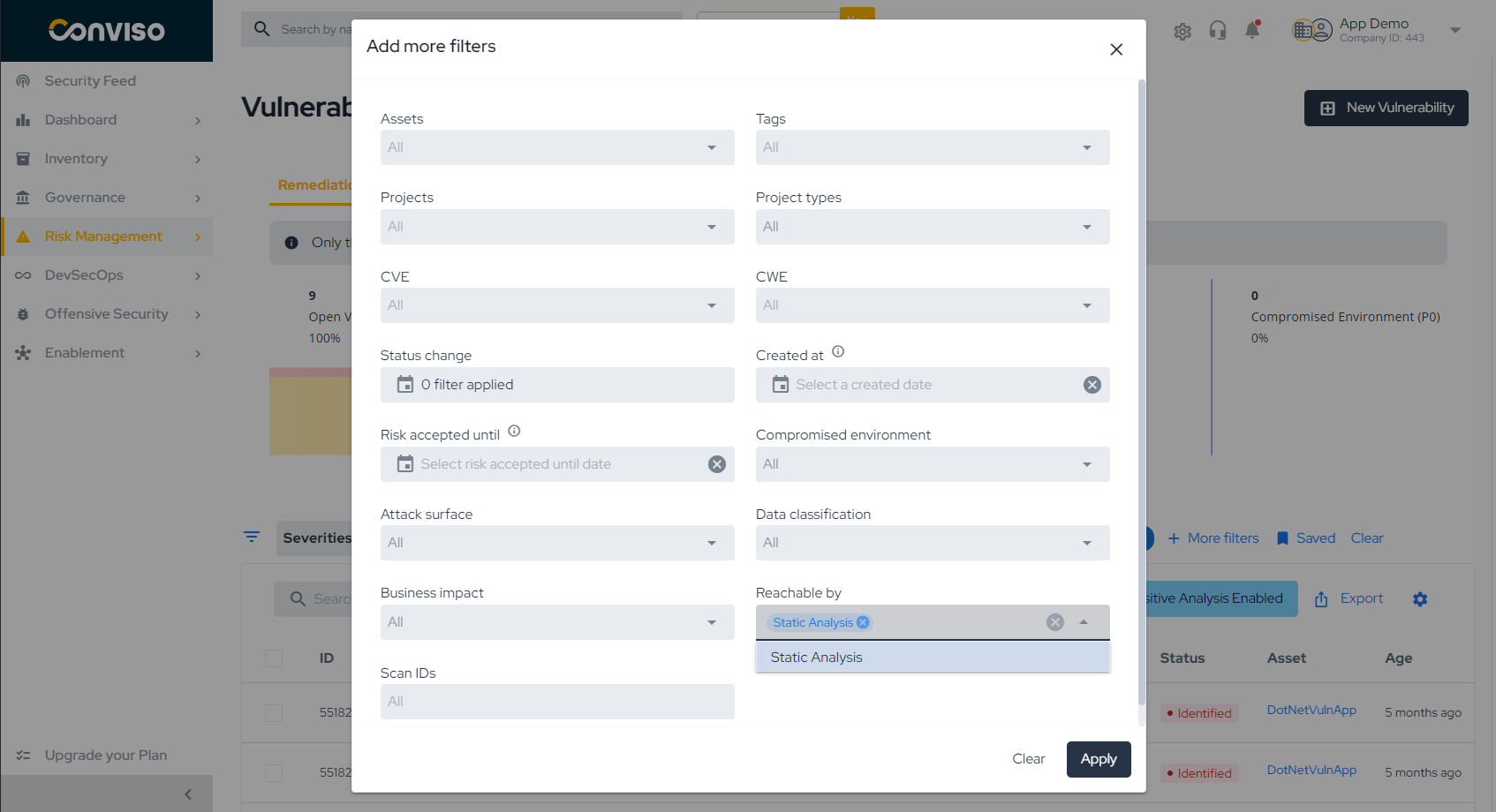
The vulnerability list can be filtered by Reachable by > Static Analysis. Use this filter to quickly surface the SCA findings that represent confirmed risk and deprioritize the rest of your backlog.
Programmatic Access via GraphQL
Reachability data is available on ScaFinding.detail for custom integrations and dashboards. See the API Getting Started page and the GraphQL Playground for the full schema reference, including the reachabilityAnalysis fields.
Support
If you have any questions or need help understanding Reachability Analysis results, please don't hesitate to contact our support team.
Contribute to the Docs
Found something outdated or missing? Help us improve the documentation with a quick suggestion or edit.
How to contributeResources
By exploring our content, you'll find resources that will enhance your understanding of the importance of a Security Application Program.
Conviso Blog: Explore our blog, which offers a collection of articles and posts covering a wide range of AppSec topics. The content on the blog is primarily in English.
Conviso's YouTube Channel: Access a wealth of informative videos covering various topics related to AppSec. Please note that the content is primarily in Portuguese.