Microsoft Teams

Introduction
The integration between Conviso Platform and Microsoft Teams keeps the development team or management channel informed without anyone having to open the platform. Conviso Platform posts one message per day — the Vulnerability Daily Digest — every morning at around 7:30 (Brasília time), covering the previous day:
- vulnerabilities that changed status, counted per status;
- assets whose Risk Score changed;
- assets created;
- vulnerabilities that crossed the SLA Approaching or Breached threshold;
- risk acceptances expiring today or in seven days.
A section only shows up when it has something to report, and every line links back to the platform with the filters already applied. For the full description, see Notifications Center.
Microsoft retired Microsoft 365 Connectors — the feature behind the Incoming Webhook option in a
Teams channel — between May 18 and May 22, 2026. The app can no longer be added to a channel,
and URLs in the https://<tenant>.webhook.office.com/webhookb2/... format stopped delivering
messages.
Webhooks are now created with the Workflows app, as described below. If your notifications stopped arriving, go to Replacing a webhook that stopped working.
Conviso Platform integration with Microsoft Teams
In this guide, we will walk you through integrating Conviso Platform with Microsoft Teams, enabling you to receive notifications for each action taken in Conviso Platform.
You need permission to use the Workflows app and to post to the target channel. The Teams webhook trigger does not require a premium Power Automate license, but Power Automate can be restricted at tenant level — if Workflows is missing, ask your Microsoft 365 administrator.
Creating a webhook with the Workflows app
First, ensure you have a channel created on Microsoft Teams to receive Conviso notifications. Then create the webhook — the steps below follow Microsoft's Create incoming webhooks with Workflows for Microsoft Teams:
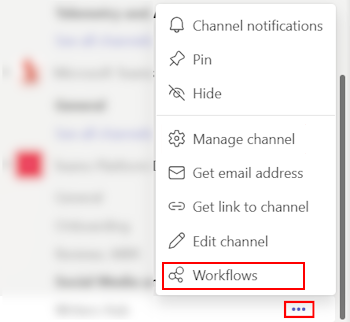
- In Microsoft Teams, select More options (…) next to the channel that will receive the notifications, then select Workflows:
- Search for and select the Send webhook alerts to a channel template:
-
Name the workflow —
Conviso Platform notifications, for example — confirm the Microsoft Teams connection is signed in, and select Next; -
Confirm the Team and the Channel, then select Save:
- Copy the webhook URL from the workflow details page. You can come back to this page and copy it again at any time, from the Workflows app:
webhook.office.comWorkflows URLs are Power Automate URLs — much longer than the old connector URL and hosted on
logic.azure.com or powerplatform.com. That is expected. Paste it exactly as copied, query string
included.
A workflow belongs to the user who created it, not to the channel. If that user leaves the organization the flow is orphaned and notifications stop. On the workflow details page, add someone else under Owners.
Integrating Conviso Platform with Microsoft Teams
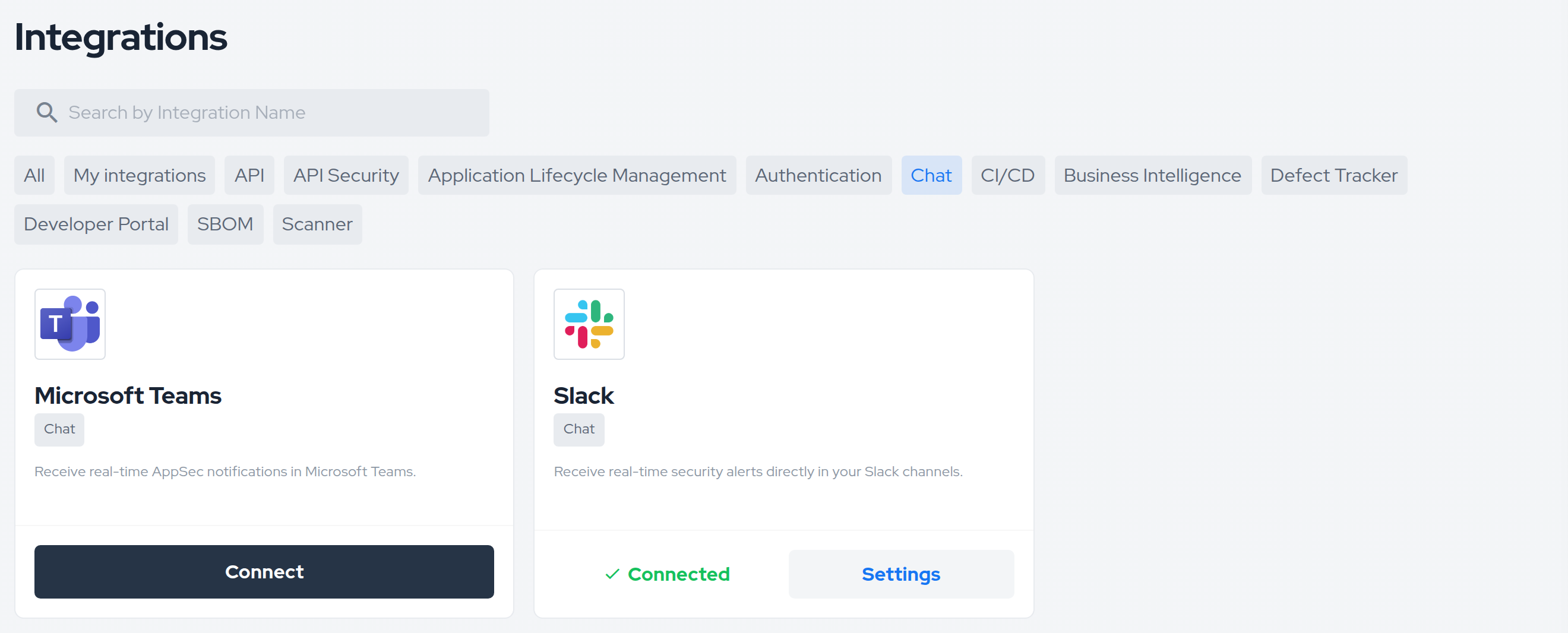
- With your webhook created, login to Conviso Platform, open Integrations, filter by the Chat category and click Connect on the Microsoft Teams card:
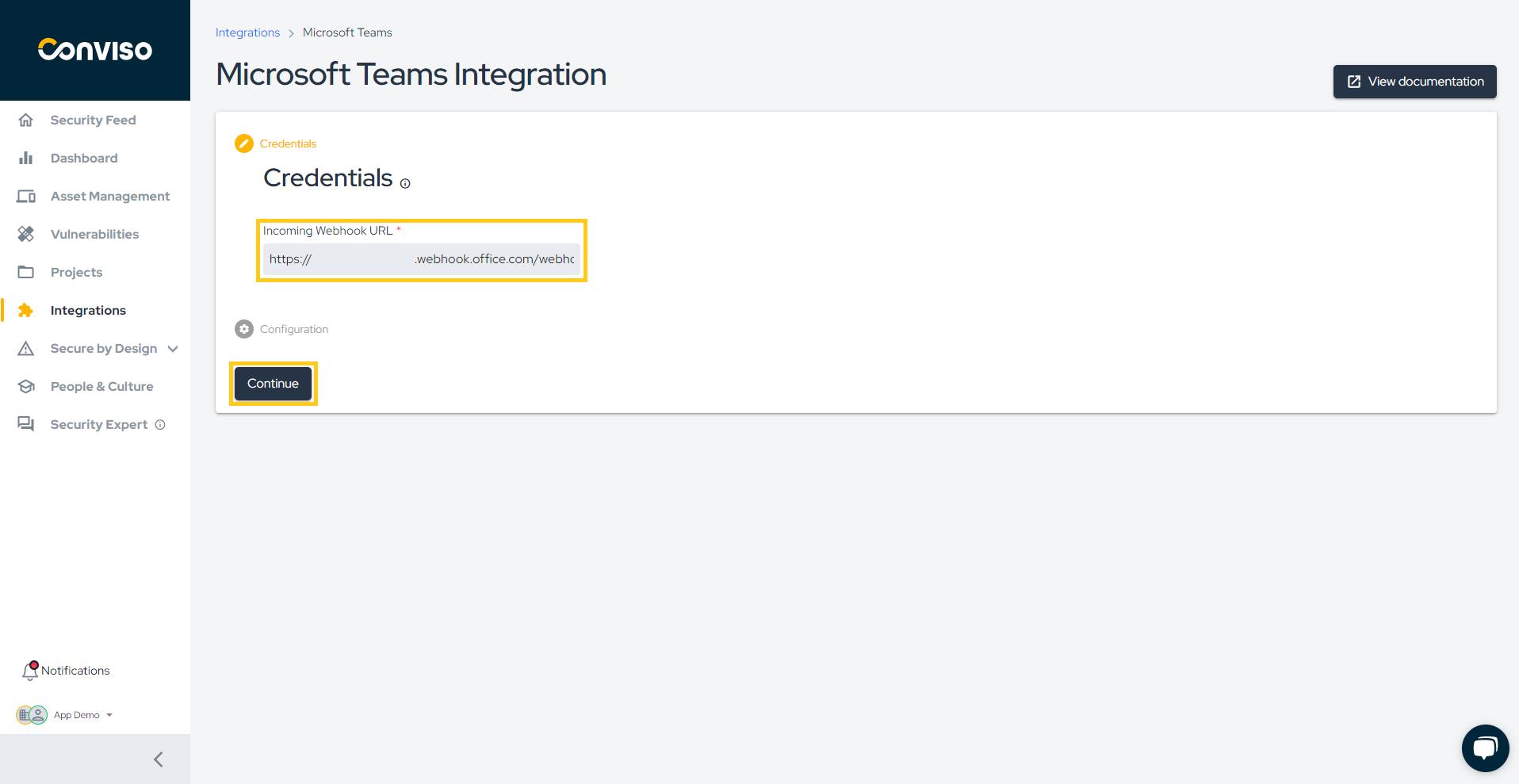
- Paste the webhook URL and click Continue. The field is named Incoming Webhook URL and its placeholder still shows the old format — paste your Workflows URL there:
- Click on Settings and enable the notifications you want the channel to receive:
Your notification preferences will be automatically saved.
From then on, the channel receives the daily digest every morning — a single message with one section per kind of change, each linking back to the platform:
The webhook is tied to the account that saved the integration, and the digest only reports what its recipient can see. So the numbers in the channel are the ones visible to whoever connected it — not the union of everyone's access. If that account is deactivated or loses access to the company, the channel goes quiet.
Replacing a webhook that stopped working
If the integration was set up before the retirement, the URL saved in Conviso Platform is dead and nothing reaches Teams. To restore it:
- Create a new webhook with the Workflows app, as described above;
- In Conviso Platform, open Integrations → Notification → Microsoft Teams, replace Incoming Webhook URL with the new URL and click Continue.
Your notification preferences are preserved — there is no need to enable the events again. The old Incoming Webhook can be removed from the channel, since it no longer does anything.
Troubleshooting
Nothing arrives in the channel. First check the timing: the digest is sent once a day, in the morning, and a day with nothing to report produces no message at all — so the first one only arrives the morning after you set the integration up. If a message is genuinely missing, open the Workflows app and check that the flow is On — flows are turned off automatically after long periods without use. The flow's run history tells you where the problem is: no runs at all means the URL saved in Conviso Platform is not the one the flow listens on.
The notification arrives without buttons. Workflows accepts both Adaptive Card and Message Card payloads, but does not render buttons from a Message Card. The notification text is delivered in full.
Support
If you have any questions or need help using our product, please don't hesitate to contact our support team.
Contribute to the Docs
Found something outdated or missing? Help us improve the documentation with a quick suggestion or edit.
How to contributeResources
By exploring our content, you'll find resources that will enhance your understanding of the importance of a Security Application Program.
Conviso Blog: Explore our blog, which offers a collection of articles and posts covering a wide range of AppSec topics. The content on the blog is primarily in English.
Conviso's YouTube Channel: Access a wealth of informative videos covering various topics related to AppSec. Please note that the content is primarily in Portuguese.